
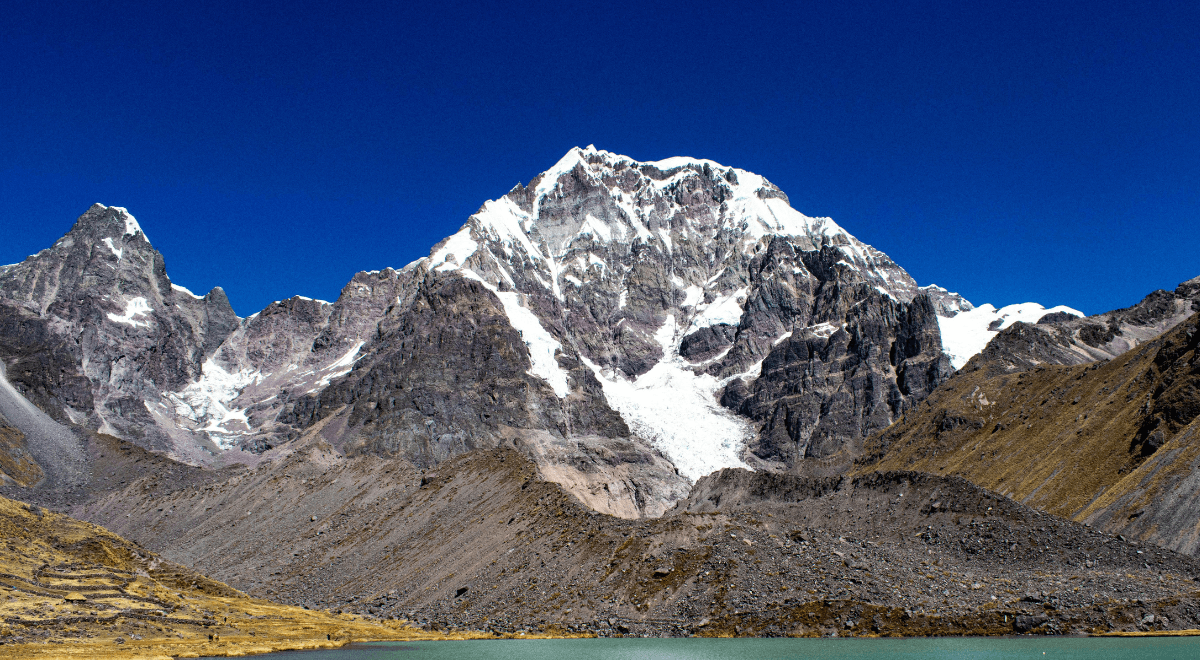
The best mountain destinations for 2026 are Zermatt in Switzerland, the Dolomites in Italy, Banff in Canada, Queenstown and Aoraki/Mount Cook in New Zealand, Nepal's Annapurna region, and Torres del Paine in Chilean Patagonia. Each one combines dependable weather windows, mature trail and lift infrastructure, and a genuinely spectacular payoff for the effort you put in.
If you are here, you probably want one of three things: a mountain view you do not have to earn with a nine-hour climb, a serious trek that will define your year, or a snow season that actually delivers. This guide answers all three. Below you will find twelve ranked destinations, what each one costs, when to go, the permit and fee rules that changed for 2026, and a short interactive quiz to match your travel style to the right range.
No filler, no recycled listicle entries. Every destination here includes altitude figures, realistic budgets and the practical detail that decides whether a trip works — access, season length and crowd pressure.
Quick Answer: The 12 Best Mountain Destinations for 2026
This table is the short version. Scroll past it for the full breakdown of each destination.
|
# |
Destination |
Country |
Best For |
Peak Season |
|
1 |
Zermatt & the Matterhorn |
Switzerland |
Iconic views without a climb |
Jul–Sep, Dec–Apr |
|
2 |
The Dolomites |
Italy |
Day hiking + food culture |
Jun–Sep |
|
3 |
Banff & Lake Louise |
Canada |
Wildlife and turquoise lakes |
Jun–Sep |
|
4 |
Queenstown & Aoraki/Mt Cook |
New Zealand |
Adventure sports |
Dec–Mar |
|
5 |
Annapurna & Khumbu |
Nepal |
Serious multi-day trekking |
Oct–Nov, Mar–May |
|
6 |
Torres del Paine |
Chile |
Raw wilderness trekking |
Nov–Mar |
|
7 |
Chamonix–Mont-Blanc |
France |
Alpinism and glacier scenery |
Jul–Sep, Jan–Apr |
|
8 |
Hakuba & the Japanese Alps |
Japan |
Powder snow and onsen |
Dec–Mar |
|
9 |
Lofoten Islands |
Norway |
Sea-meets-peak drama |
Jun–Aug, Feb–Mar |
|
10 |
Svaneti & Kazbegi |
Georgia |
Budget high-mountain travel |
Jun–Sep |
|
11 |
Julian Alps & Lake Bled |
Slovenia |
Compact, easy first trip |
May–Sep |
|
12 |
High Atlas & Toubkal |
Morocco |
Winter-sun trekking |
Apr–May, Sep–Oct |
How These Mountain Destinations Were Ranked
Rankings on this page are not based on photogenic appeal alone. Each destination was scored against five practical criteria that determine whether a mountain trip actually succeeds:
- Scenic density — how much genuine mountain drama you get per hour of travel and effort.
- Access and infrastructure — airports, rail links, cable cars, marked trails, mountain huts, rescue services.
- Season reliability — the length and predictability of the usable weather window.
- Cost-to-value ratio — what a realistic daily budget buys you on the ground.
- Crowd pressure — whether the experience survives peak-season visitor volume.
Elevation figures cited are the officially surveyed heights. Fees and permit rules reflect the rules published for the 2026 season; always reconfirm with the official park or tourism authority before you book, because mountain regions revise these more often than most destinations do.
The 12 Best Mountain Destinations to Visit in 2026
1. Zermatt and the Matterhorn, Switzerland
The Matterhorn (4,478 m) is the single most recognisable mountain silhouette on earth, and Zermatt is the rare place where a world-class view requires nothing more than stepping off a train. The village is car-free, served by electric taxis and a cog railway from Täsch, which keeps the valley air clean and the noise level low.
- Best for: First-time alpine travellers, photographers, families, non-hikers.
- Signature experience: The Gornergrat cog railway climbs to 3,089 m for a panorama taking in 29 peaks above 4,000 m, including Monte Rosa, Switzerland's highest summit.
- Best time: July to September for hiking; December to April for skiing. Late September delivers larch colour and thinner crowds.
- Getting there: Zurich or Geneva, then rail to Visp and the Matterhorn Gotthard Bahn to Zermatt. No private cars beyond Täsch.
- Realistic budget: CHF 220–400 per person per day including a mid-range hotel, lift passes and meals. Switzerland is expensive — plan half-board and use the Migros supermarket for lunches.
|
Insider tip: Walk the Five Lakes Trail (Fünfseenweg) in the late afternoon. Stellisee and Grindjisee both reflect the Matterhorn, and the light after 4 pm is far better than the mid-morning haze most visitors shoot in. |
2. The Dolomites, Italy
Pale limestone towers, alpine meadows, and a hut network that serves espresso and homemade strudel at 2,300 m. The Dolomites were inscribed as a UNESCO World Heritage Site in 2009 for their geological significance and exceptional landscape, and they remain the best hiking-plus-comfort combination in Europe.
- Best for: Day hikers, via ferrata climbers, road cyclists, food-focused travellers.
- Signature experience: The Tre Cime di Lavaredo loop — roughly 10 km, 350 m of ascent, and arguably the most photographed rock formation in the Alps.
- Best time: Mid-June to late September. Huts (rifugi) generally open from around 20 June to 20 September.
- Getting there: Fly to Venice or Innsbruck, then drive. A car is genuinely useful here; public transport between valleys is slow.
- Realistic budget: €120–200 per day. Half-board in a rifugio typically costs €60–85 including dinner and breakfast.
|
Insider tip: Book rifugi the moment reservations open in spring. Popular huts on the Alta Via 1 route fill months ahead, and walk-ins are not realistic in August. |
3. Banff and Lake Louise, Canada
Banff was established in 1885 as Canada's first national park and remains the benchmark for accessible North American mountain scenery. The glacial flour suspended in Lake Louise and Moraine Lake produces that famous turquoise — it is a real optical effect, not a filter.
- Best for: Families, wildlife spotting, scenic drives, moderate hiking.
- Signature experience: The Icefields Parkway between Banff and Jasper — 232 km past more than 100 glaciers, widely rated among the world's finest mountain drives.
- Best time: June to September for hiking; January to March for skiing and frozen-lake walks.
- Getting there: Fly to Calgary, then drive 90 minutes west.
- Realistic budget: CAD 200–350 per day. A Parks Canada pass is mandatory.
|
Insider tip: Private vehicle access to Moraine Lake is closed — you must use the Parks Canada shuttle or a licensed operator. Reserve your shuttle seat well in advance; this catches out thousands of visitors every summer. |
4. Queenstown and Aoraki/Mount Cook, New Zealand
New Zealand's Southern Alps compress glaciers, fjords, braided rivers and beech forest into a few hours' drive. Aoraki/Mount Cook, at 3,724 m, is New Zealand's highest peak, and the surrounding national park holds the country's longest glacier, the Tasman.
- Best for: Adventure sports, road trips, stargazing, self-drive travellers.
- Signature experience: The Hooker Valley Track — 10 km return, almost flat, three swing bridges, and a glacial lake directly beneath Aoraki. Best short mountain walk in the southern hemisphere.
- Best time: December to March (southern summer). Shoulder months of November and April are quieter and still workable.
- Getting there: Fly into Queenstown or Christchurch; hire a car or campervan.
- Realistic budget: NZD 180–320 per day.
|
Insider tip: The Aoraki Mackenzie International Dark Sky Reserve is one of the largest in the world. Clear nights at Lake Pukaki deliver Milky Way visibility that most travellers have never experienced. |
5. The Annapurna and Khumbu Regions, Nepal
Nepal is where mountain travel stops being scenery and becomes an undertaking. Mount Everest stands at 8,849 m following the joint China–Nepal resurvey published in 2020, and eight of the world's fourteen 8,000-metre peaks sit within Nepal's borders.
- Best for: Multi-day trekking, cultural immersion, travellers with time and patience.
- Signature experience: The Annapurna Circuit, crossing Thorong La pass at 5,416 m — one of the highest trekking passes in the world. Or Everest Base Camp at 5,364 m for the name recognition.
- Best time: October to November delivers the clearest post-monsoon skies. March to May offers rhododendron bloom and warmer nights but hazier views.
- Getting there: Fly to Kathmandu, then domestic flight or road to Pokhara or Lukla.
- Realistic budget: USD 35–70 per day on teahouse treks; USD 1,400–3,000 for a fully guided package.
|
Insider tip: Nepal requires trekkers in most national parks and conservation areas to use a licensed guide. Budget for the guide, a TIMS card and the relevant conservation area permit — and build two acclimatisation days into any itinerary crossing 4,000 m. |
6. Torres del Paine, Chilean Patagonia
Granite towers rising straight out of the steppe, glaciers calving into milky lakes, and wind that will genuinely knock you sideways. Torres del Paine is the least comfortable destination on this list and, for many trekkers, the most rewarding.
- Best for: Experienced trekkers, wilderness photographers, guanaco and condor spotting.
- Signature experience: The W Trek — roughly 80 km over four to five days — or the full O Circuit at about 130 km over eight to nine days.
- Best time: November to March. December and January have the longest daylight and the strongest wind.
- Getting there: Fly to Punta Arenas via Santiago, then bus to Puerto Natales, then park transfer.
- Realistic budget: USD 100–250 per day. Refugio beds and camping platforms both require advance reservation.
|
Insider tip: Refugio and campsite bookings inside the park are handled by separate concessionaires and sell out for the December–February window months ahead. Lock accommodation first, flights second — not the other way round. |
7. Chamonix–Mont-Blanc, France
Mont Blanc, at roughly 4,805 m, is the highest peak in the Alps, and its exact height is re-measured every two years because the summit snow cap shifts. Chamonix sits at its foot and functions as the unofficial capital of world alpinism.
- Best for: Serious mountaineers, glacier scenery, high-altitude cable car access, ski touring.
- Signature experience: The Aiguille du Midi cable car climbs to 3,842 m in about 20 minutes — one of the highest vertical ascents by cable car anywhere.
- Best time: July to September for hiking and climbing; January to April for skiing.
- Getting there: Fly to Geneva; Chamonix is roughly a 75-minute transfer.
- Realistic budget: €130–260 per day.
|
Insider tip: Chamonix is the traditional start of the Tour du Mont Blanc, a 170 km circuit through France, Italy and Switzerland taking 10–11 days. If you only have three days, walk the Lac Blanc and Grand Balcon Sud sections — the best views on the entire loop. |
8. Hakuba Valley and the Japanese Alps, Japan
Siberian air crossing the Sea of Japan dumps some of the driest, deepest snow on the planet across Honshu's northern ranges. Hakuba hosted alpine and jumping events at the 1998 Nagano Winter Olympics and still has the lift infrastructure to prove it.
- Best for: Skiers and snowboarders, onsen culture, winter photography.
- Signature experience: A powder morning at Happo-One followed by an outdoor onsen with the Northern Alps in view.
- Best time: Late December to early March for snow; July to September for the Kamikochi highland valley and alpine hiking.
- Getting there: Tokyo to Nagano by Hokuriku Shinkansen (about 90 minutes), then bus to Hakuba.
- Realistic budget: ¥15,000–35,000 per day.
|
Insider tip: Kamikochi in summer is the underrated half of the Japanese Alps. Private vehicles are banned; you arrive by bus, and the Azusa River valley beneath Mount Hotaka is as good as anything in Europe at a fraction of the crowd density. |
9. The Lofoten Islands, Norway
Nowhere else do 1,000-metre peaks rise vertically out of the sea the way they do in Lofoten. The archipelago sits above the Arctic Circle, which means midnight sun from late May to mid-July and northern lights from September through March.
- Best for: Photographers, sea kayakers, aurora chasers, short steep hikes.
- Signature experience: The Reinebringen stairway — around 1,900 stone steps built by Nepali sherpa crews — to a viewpoint above Reine.
- Best time: June to August for hiking and midnight sun; February to March for aurora with usable daylight.
- Getting there: Fly to Bodø or Evenes, then ferry or road.
- Realistic budget: NOK 1,500–3,000 per day. Self-catering in a rorbu (converted fisherman's cabin) cuts costs substantially.
|
Insider tip: Norway's allemannsretten (right to roam) permits wild camping on uncultivated land, but Lofoten has introduced local restrictions in high-pressure spots. Check the municipal rules for Moskenes and Vestvågøy before pitching a tent. |
10. Svaneti and Kazbegi, Georgia
The Caucasus is the best value mountain range in the world right now. Mount Kazbek reaches 5,054 m, and the medieval stone defence towers of Ushguli in Upper Svaneti sit at around 2,100 m, making it one of the highest continuously inhabited settlements in Europe.
- Best for: Budget travellers, off-the-beaten-track trekking, cultural history.
- Signature experience: The four-day Mestia to Ushguli trek, staying in family guesthouses with home-distilled chacha and supra feasts each evening.
- Best time: June to September. Roads to Ushguli are unreliable outside that window.
- Getting there: Fly to Tbilisi or Kutaisi, then domestic flight to Mestia or a long but scenic marshrutka ride.
- Realistic budget: USD 30–60 per day including guesthouse half-board.
|
Insider tip: Guesthouse half-board in Svaneti typically runs GEL 70–110 and includes enormous home-cooked dinners. This is the single cheapest way to trek a 5,000 m range anywhere on earth. |
11. The Julian Alps and Lake Bled, Slovenia
Slovenia packs an entire alpine country into an area smaller than Wales. Mount Triglav (2,864 m) is the national symbol and appears on the country's flag — climbing it is treated as something close to a civic rite of passage.
- Best for: First mountain trip, families, travellers short on time, cyclists.
- Signature experience: Lake Bohinj — larger, wilder and far less crowded than neighbouring Lake Bled — plus the Vintgar Gorge boardwalk.
- Best time: May to September. July and August are busiest; June and September are the sweet spot.
- Getting there: Fly to Ljubljana; everything in Triglav National Park is within 90 minutes.
- Realistic budget: €80–150 per day.
|
Insider tip: Vintgar Gorge now uses timed-entry tickets in peak season and regularly sells out. Book online the week before, and take the first slot of the day. |
12. The High Atlas and Mount Toubkal, Morocco
Jebel Toubkal, at 4,167 m, is the highest peak in North Africa and one of the few 4,000-metre summits that a fit walker can reach in two days without technical skills. Berber villages, mule trails and mint tea at altitude make this a completely different mountain culture.
- Best for: Winter-sun trekking, shoulder-season travel, cultural contrast.
- Signature experience: The two-day Toubkal ascent from Imlil, overnighting at a refuge around 3,200 m.
- Best time: April to May and September to October. Summer is punishingly hot at low altitude; winter needs crampons and an ice axe.
- Getting there: Fly to Marrakesh; Imlil is roughly 90 minutes by road.
- Realistic budget: USD 50–110 per day including a guide and mule support.
|
Insider tip: Morocco requires a licensed mountain guide for Toubkal ascents. Hire through an accredited operator in Imlil rather than through a Marrakesh street tout — the price difference is small and the safety difference is not. |
|
Also worth your time: Telluride and the Colorado Rockies (USA) · the Tien Shan around Karakol (Kyrgyzstan) · the Peruvian Andes around Cusco and Ausangate · the Drakensberg (South Africa) · Sapa and Fansipan (Vietnam) · the Dolomiti-adjacent Zillertal (Austria) · Madeira's levada-laced peaks (Portugal). |
Interactive: Find Your Mountain Match in 60 Seconds
Answer six questions, tally your letters, and read your result. Most mismatched mountain trips fail on one of these six variables, not on the destination itself.
|
# |
Question |
A |
B |
C |
D |
|
1 |
How many hours can you walk per day? |
Under 2 |
3–5 |
6–8 |
8+ |
|
2 |
Your accommodation floor? |
Hotel, en-suite |
Guesthouse |
Mountain hut |
Tent |
|
3 |
Daily budget per person? |
$250+ |
$120–250 |
$60–120 |
Under $60 |
|
4 |
Highest altitude slept at? |
Sea level |
Under 2,500 m |
2,500–4,000 m |
Above 4,000 m |
|
5 |
Trip length available? |
3–4 days |
5–7 days |
8–12 days |
14+ days |
|
6 |
What are you actually chasing? |
The view |
The food + view |
The trail |
The challenge |
Now count your most frequent letter:
|
Mostly |
Your profile |
Go here in 2026 |
|
A |
Scenery-first, comfort non-negotiable |
Zermatt · Lake Bled · Banff |
|
B |
Balanced hiker with an appetite |
The Dolomites · Julian Alps · Queenstown |
|
C |
Committed trekker, hut-and-trail person |
Svaneti · Torres del Paine (W) · Toubkal |
|
D |
Expedition mindset, time-rich |
Annapurna Circuit · Everest Base Camp · O Circuit |
Tied between two letters? Take the lower one. Almost every first-time mountain traveller overestimates daily walking capacity at altitude by roughly 30 percent, and the resulting trip is one of endurance rather than enjoyment.
[ DEV NOTE — build this table as a JavaScript quiz widget with instant results, a "share your result" button and a soft CTA to relevant itineraries. Interactive quizzes typically lift average time-on-page substantially, which is a direct positive signal for both classic ranking and AI-answer selection. ]
Best Mountain Destinations by Travel Style
Best Mountain Destinations for Families
Banff, Zermatt and Slovenia's Julian Alps are the strongest family choices. All three have cable cars or trains that deliver a summit view without a summit hike, short waymarked loops under 5 km, and reliable medical access. Avoid anything requiring sustained travel above 3,000 m with children under eight.
Best Budget Mountain Destinations
Georgia, Nepal and Morocco deliver the most mountain per dollar. Expect USD 30–70 per day in Svaneti or on a Nepali teahouse trek, versus CHF 250+ in the Swiss Alps for a comparable amount of scenery. Shoulder season in Slovenia and the Italian Dolomites is the budget option within Western Europe.
Best Mountain Destinations for Non-Hikers
Zermatt, Chamonix and Banff are engineered for people who want the view without the vertical. The Gornergrat railway, the Aiguille du Midi cable car and the Icefields Parkway each deliver world-class mountain scenery from a seat.
Best Mountain Destinations for Serious Trekkers
Nepal, Patagonia and the Tour du Mont Blanc are the three that genuinely test you. Nepal for altitude, Patagonia for weather, the TMB for sustained daily elevation gain across three countries.
Best Mountain Destinations for Snow
Hakuba, Chamonix, Zermatt and Banff cover the range from powder-obsessed to family-friendly. Japan for snow quality, Chamonix for terrain, Zermatt for reliability at altitude, Banff for value in North America.
When to Go: 2026 Mountain Travel Calendar
|
Month |
Go here |
Why |
|
Jan–Feb |
Hakuba, Chamonix, Banff |
Peak snow depth and stable cold |
|
Mar |
Lofoten, Zermatt |
Aurora with daylight; spring ski conditions |
|
Apr–May |
High Atlas, Slovenia, Nepal (spring) |
Wildflowers, rhododendron, pre-heat comfort |
|
Jun |
Dolomites, Julian Alps, Svaneti |
Huts open, long days, pre-peak crowds |
|
Jul–Aug |
Lofoten, Zermatt, Chamonix, Banff |
Full trail access; book far ahead |
|
Sep |
Dolomites, Georgia, Morocco, Zermatt |
Best all-round month in the northern hemisphere |
|
Oct–Nov |
Nepal, Torres del Paine (from Nov) |
Clearest Himalayan skies; Patagonian spring |
|
Dec |
Queenstown, Aoraki, Hakuba |
Southern summer opens; Japanese snow arrives |
|
The single best month overall is September. Northern-hemisphere trails are open, families have gone home, hut and refuge prices soften, and the light quality for photography is at its annual peak. |
What Changed for Mountain Travellers in 2026
This is the section most listicles skip — and it is the one that will actually affect your booking.
Permit systems have tightened almost everywhere
Timed-entry and quota systems that were pandemic-era experiments are now permanent fixtures. Moraine Lake in Banff is closed to private vehicles. Vintgar Gorge in Slovenia runs timed tickets. Torres del Paine requires pre-booked accommodation for the W and O routes before you are allowed to start. Assume a permit exists until you confirm it does not.
Fee structures are rising and being restructured
Bhutan's Sustainable Development Fee remains at USD 100 per person per night — a fifty percent reduction from the standard USD 200 rate, held in place until 31 August 2027 — alongside a separate USD 40 visa fee. Bhutan also introduced a 5% Goods and Services Tax on tourism services from January 2026, which applies to hotels, guides and transport but not to the SDF or visa fee itself. Verify current rates with the Department of Tourism before you commit, as these figures are revised periodically.
Snowlines and glacier routes are shifting
Several classic alpine routes now open later and close earlier than their published historic windows. Glacier crossings that were once straightforward walk-ups increasingly require guides and crevasse equipment. Check the current-season route status with the local mountain guides' bureau, not last year's guidebook.
Guide requirements have expanded
Nepal requires licensed guides for solo trekkers across most protected areas. Morocco requires accredited guides for Toubkal. Several Patagonian and alpine routes have introduced similar rules. Build the guide cost into your budget from the start rather than treating it as optional.
Rail access to the Alps has improved
Night train services across Central Europe have expanded meaningfully, making car-free access to Zermatt, Chamonix and the Austrian Alps more practical than at any point in the last thirty years. For travellers watching their carbon footprint, this is the most significant recent change in European mountain travel.
How to Plan a Mountain Trip That Actually Works
Acclimatise properly — this is not optional
Above roughly 2,500 m, ascend no more than 300–500 m of sleeping altitude per day and take a rest day every 1,000 m gained. Altitude sickness does not correlate with fitness. Marathon runners get it. If symptoms worsen, descend — that is the only reliable treatment.
Build weather buffer days into the itinerary
Mountain weather cancels plans. A seven-day itinerary with zero slack is a seven-day itinerary that will not survive contact with a storm cycle. Add at least one buffer day per week of travel.
Layer, and never in cotton
Merino or synthetic base layer, fleece or synthetic mid layer, waterproof and windproof shell. Cotton holds moisture, loses insulation when wet and is a genuine hypothermia risk at altitude.
Buy insurance that names your actual altitude ceiling
Standard travel policies frequently cap coverage at 3,000 m or 4,000 m and exclude helicopter evacuation. If your itinerary crosses Thorong La at 5,416 m, you need a policy that explicitly covers trekking to that height with rescue included.
Book accommodation before flights for capacity-limited destinations
For Torres del Paine, Alta Via hut routes and Everest Base Camp lodges, beds are the constraint — not seats. Flights are almost always reschedulable. Refugio bookings are not.
Comparing routes, seasons and realistic daily costs side by side is the fastest way to narrow a shortlist. Detailed itinerary planning tools and up-to-date destination guides for the best mountain destinations can help you match a range to your fitness level, budget and available dates before you commit to non-refundable bookings.
Five Mistakes That Ruin Mountain Trips
- Booking the peak-season week. Late August in the Dolomites and January in Queenstown mean maximum price and maximum crowd. Shift one to three weeks either side and the experience transforms.
- Underestimating daily distances at altitude. A 12 km trail at 4,000 m is not a 12 km trail at sea level. Expect roughly half your usual pace above 3,500 m.
- Packing for the forecast instead of the range. Mountain temperatures routinely swing 20°C between valley floor and summit within a single day.
- Skipping the acclimatisation day to save money. The single most expensive decision available to you, because an evacuation costs more than the entire rest of the trip.
- Assuming mobile coverage. Download offline maps, carry a paper backup, and for remote routes consider a satellite messenger.
Frequently Asked Questions
What is the best mountain destination in the world?
Zermatt in Switzerland is widely considered the best all-round mountain destination because it combines the iconic Matterhorn view, a car-free village, and high-altitude rail and cable car access suitable for all fitness levels. For serious trekking, Nepal's Annapurna region ranks first.
Which is the cheapest mountain destination to visit?
Georgia's Caucasus region is the cheapest major mountain destination, with realistic daily costs of USD 30–60 including guesthouse accommodation and meals. Nepal follows at USD 35–70 per day on teahouse treks, and Morocco's High Atlas at USD 50–110 including a guide.
What is the best month to visit mountain destinations?
September is the best overall month for northern-hemisphere mountains. Trails and huts remain open, summer crowds have dispersed, prices soften, and light quality peaks. For the southern hemisphere — New Zealand and Patagonia — the equivalent window is November to early March.
Do I need to be fit to visit mountain destinations?
No. Destinations such as Zermatt, Banff and Chamonix offer world-class mountain views via cable cars, cog railways and scenic drives requiring no hiking at all. Fitness matters only for multi-day treks, where the ability to walk 5–8 hours daily on uneven ground is essential.
Which mountain destination is best for beginners?
Slovenia's Julian Alps are the best beginner mountain destination. Distances are short, trails are exceptionally well marked, elevations stay moderate, English is widely spoken, and the entire Triglav National Park is within 90 minutes of Ljubljana airport.
How high is too high for a first mountain trip?
Keep sleeping altitude below 3,000 m on a first mountain trip. Above 2,500 m, ascend no more than 300–500 m of sleeping altitude per day. Altitude sickness risk rises sharply above 3,500 m and is unrelated to physical fitness.
Do I need a guide for mountain trekking?
It depends on the country. Nepal requires licensed guides for solo trekkers in most protected areas, and Morocco requires accredited guides for Toubkal. The Alps, Dolomites, Slovenia and New Zealand permit independent hiking on marked trails without a guide.
What is the best mountain destination for families with children?
Banff in Canada is the strongest family choice, offering short waymarked trails, gondola access to viewpoints, wildlife spotting and full medical infrastructure. Zermatt and Slovenia's Lake Bohinj area are close alternatives with similar advantages and shorter travel times from Europe.
How much does a mountain holiday cost?
Daily costs range from about USD 30 in Georgia and Nepal to over CHF 300 in Switzerland. A realistic mid-range budget is USD 120–200 per person per day in Europe, USD 150–250 in Canada and New Zealand, and USD 35–70 in South Asia and the Caucasus.
Which mountain destination has the best snow?
Hakuba and the wider Japanese Alps receive the most consistently dry, deep powder, driven by Siberian air crossing the Sea of Japan. Chamonix offers the most challenging lift-accessed terrain, and Zermatt the most reliable high-altitude snow cover late in the season.
Is Everest Base Camp harder than the Annapurna Circuit?
Everest Base Camp reaches 5,364 m and involves a flight into Lukla, while the Annapurna Circuit crosses Thorong La at 5,416 m over a longer route with more gradual ascent. Annapurna is longer; Everest gains altitude faster, making it harder to acclimatise.
Can you visit mountain destinations in the off-season?
Yes, but check infrastructure status first. Many mountain huts, cable cars and access roads close entirely outside peak months. Off-season travel offers lower prices and near-empty trails, but requires more self-sufficiency, flexible plans and appropriate cold-weather equipment.
The Verdict: Where to Go in 2026
If you want the definitive mountain view with the least friction, go to Zermatt. If you want the best combination of hiking, food and comfort, go to the Dolomites. If you want the trip that redefines what you think you are capable of, go to Nepal. And if your budget is the binding constraint, Georgia delivers more genuine high-mountain experience per dollar than anywhere else on earth right now.
The best mountain destination is the one that matches your actual fitness, budget and available time — not the one with the highest peak. Use the quiz above, be honest about your letter, and book accommodation before you book flights.