
Yland after a fourteen-hour flight, switch off airplane mode, and nothing happens. No maps, no ride-hailing app, no message to the host who is waiting. This is the exact moment travellers realise they picked the wrong plan — and it is the reason the search for the best travel SIM cards has become one of the first things people sort out before a trip, not after.
Here is the direct answer, up front.
|
QUICK ANSWER — Which travel SIM should you buy? For most international travellers in 2026, a travel eSIM is the better choice than a physical SIM card. It activates in under five minutes, keeps your home number live for banking codes, and removes the airport-kiosk queue entirely. Best all-round coverage: Airalo — widest country list and the safest "landing eSIM" to install before you fly. Best for heavy data users: Holafly — unlimited-style day passes, priced per day rather than per gigabyte. Best for privacy and support: Saily — built by the Nord Security team, with strong app-side security features. Best for long stays (1 month+) in one country: a local physical SIM card bought at the destination is still usually cheapest. Best for cheap short trips: budget providers such as Nomad or Jetpac, which frequently undercut the big names on 5GB regional plans. |
Below, we break down how each option actually performs, what the marketing pages leave out, and the checks that stop you overpaying. Every recommendation here is framed around a single question: what are you actually going to do with the data?
What Is a Travel SIM Card? (And How eSIMs Changed It)
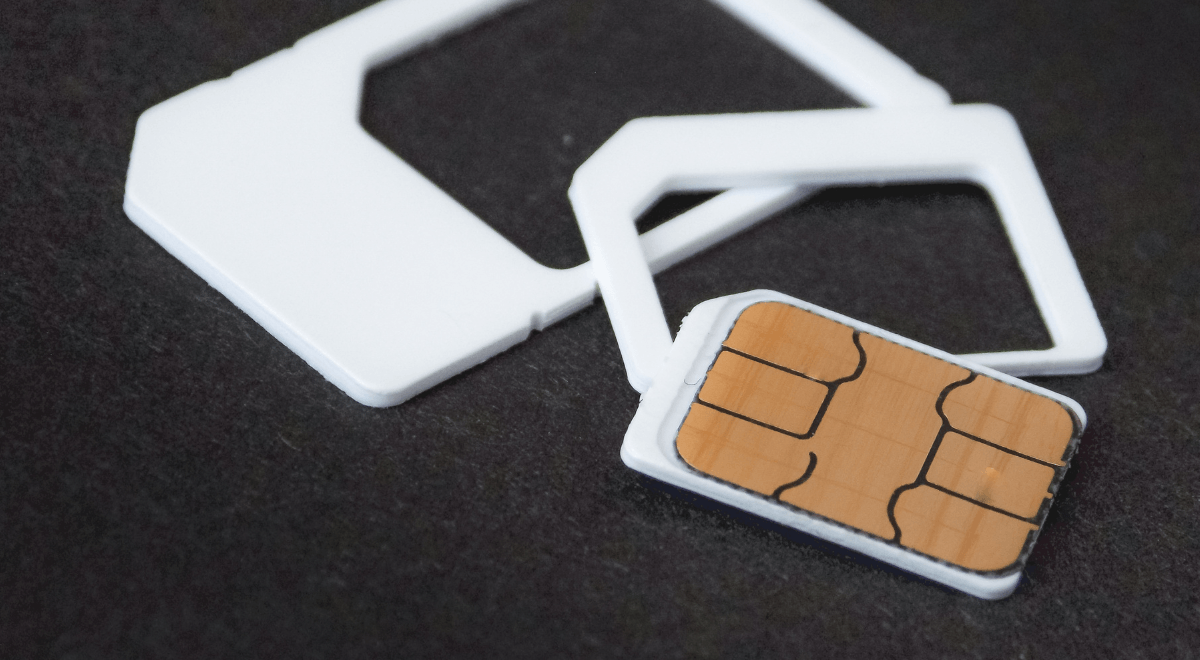
A travel SIM card is a prepaid mobile data plan designed for use outside your home country. It replaces expensive carrier roaming with a local or regional rate. In 2026 it comes in two forms:
- Physical SIM card — a plastic chip you insert into your phone. Sold at airport kiosks, convenience stores, and telecom shops at your destination. Cheapest per gigabyte, but you must remove your home SIM.
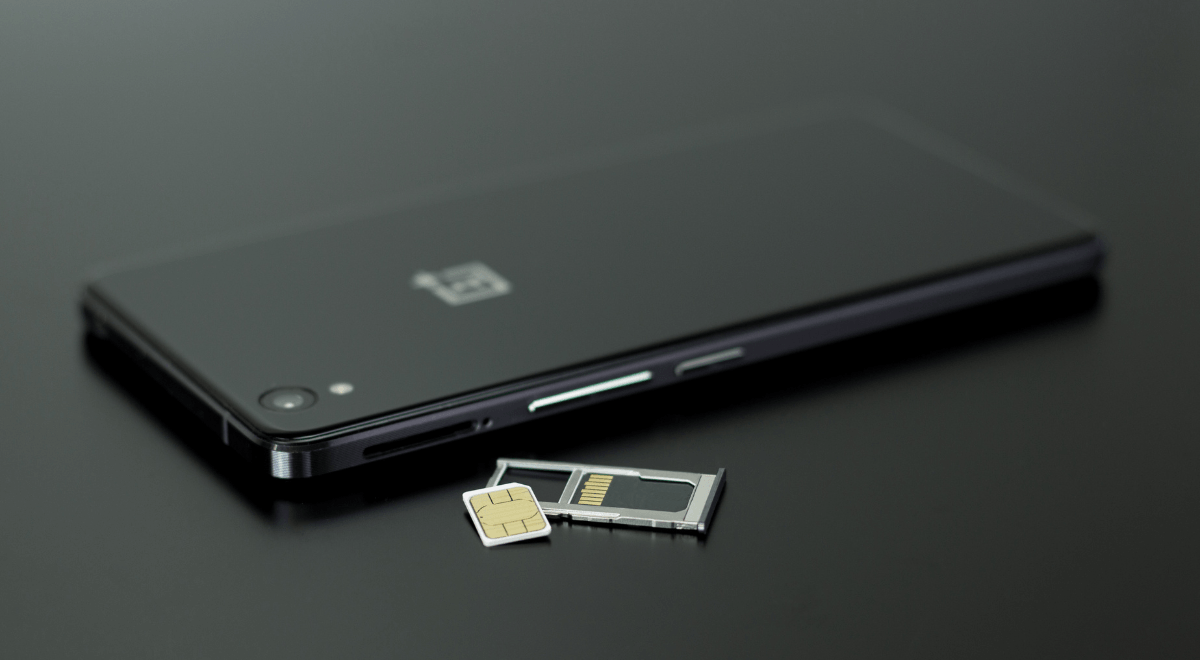
- eSIM (embedded SIM) — a digital profile downloaded to your phone via a QR code or app. No plastic, no swapping, and it runs alongside your existing SIM on a dual-SIM device.
The shift has been rapid. Industry research puts eSIM-capable devices well past the billion mark, and the large majority of flagship smartphones sold today ship eSIM-ready. Apple removed the physical SIM tray from US iPhones entirely, which effectively settled the argument for a huge slice of travellers.
eSIM vs Physical SIM: The Honest Comparison
|
Factor |
Travel eSIM |
Local Physical SIM |
|
Setup time |
2–5 minutes, before you leave home |
20–60 minutes after landing, plus queueing |
|
Cost per GB |
Higher — you pay for convenience |
Lowest available rate |
|
Keeps home number |
Yes (dual SIM) — critical for OTP codes |
No, unless you have dual SIM slots |
|
ID / KYC paperwork |
None in most cases |
Passport registration required in many countries |
|
Best for |
Trips under 3 weeks, multi-country routes |
Stays of a month or more in one country |
|
Risk if it fails |
Low — reinstall or switch provider in-app |
Medium — you must return to the shop |
The practical rule: use an eSIM as your arrival connection. If you are staying more than three or four weeks in a single country, buy a local SIM once you are settled and keep the eSIM as backup.
Best Travel SIM Cards and eSIMs in 2026: Side-by-Side
Prices below reflect typical published rates for a 30-day regional plan as of mid-2026. Providers change pricing often, so treat these as calibration, not gospel — always check the plan page for the specific country you are visiting.
| Provider | Best For | Typical Coverage | Hotspot / Tethering | Watch Out For |
|---|---|---|---|---|
| Airalo | Overall reliability | 170+ countries | Allowed on most plans | Per-GB pricing adds up on long trips |
| Holafly | Unlimited data users | 200+ destinations | Capped (roughly 1–2GB/day) | "Unlimited" carries an undocumented fair-use throttle |
| Saily | Privacy & support | 190+ destinations | Allowed | Rural coverage can be patchy in some regions |
| Ubigi | Flexible billing, 5G | 200+ countries | Allowed | App experience is less polished than rivals |
| Nomad | Budget regional plans | 165+ countries | Allowed | Smaller support team, slower replies |
| Jetpac | Cheapest short trips | Marketing claims 200+ | Allowed | Individual plan coverage is far narrower than headline |
| Orange Holiday | Europe with a phone number | Europe (30+ countries) | Allowed | Physical/eSIM hybrid, Europe only |
| Local SIM | Long single-country stays | One country | Usually unrestricted | Passport registration, language barrier |
EXPERT NOTE — the number that misleads everyone
A provider's "200+ destinations" figure describes everything the company sells across its whole catalogue — not the plan sitting in your cart. Independent 2026 testing has found global plans covering fewer than 100 countries despite platform-wide claims of 190+.
Before you pay, open the plan page and read the actual country list attached to that SKU. This single check prevents the most common travel-connectivity failure there is.
Provider Breakdown: Who Each One Is Actually For
Airalo — The Safest Default
Airalo is the closest thing to a neutral recommendation. Its global Discover plan works as a landing eSIM: install it before departure, arrive connected, then decide locally whether a cheaper option makes sense. Coverage breadth and refund handling are its real strengths; per-gigabyte cost is its weakness on trips beyond two weeks.
- Choose it if: you cross multiple countries, or you want one app that works everywhere.
- Skip it if: you are staying in one country for a month and want the lowest price.
Holafly — For People Who Do Not Want to Count Gigabytes
Holafly sells day passes rather than data buckets, typically in the region of $27 per week or $75 per month regardless of destination. That is expensive if you use 3GB and excellent value if you stream, video-call, and upload daily.
- The fine print that matters: the unlimited plans apply a hotspot cap of roughly 1–2GB per day, and heavy users report speed throttling after several gigabytes. It is unlimited in the everyday sense, not the technical one.
Saily — Security-First Connectivity
Built by the team behind NordVPN, Saily leans into what actually matters on foreign networks: encrypted traffic, ad and tracker blocking, and a virtual-location feature. It picked up a Rising Star award at the MVNOs World Congress in Amsterdam in June 2026 and has added coverage for cruise vessels, which almost no rival offers.
- Choose it if: you work from hotel and café Wi-Fi, or you are cruising.
- Verify first: rural coverage. Reviews consistently praise city performance and flag smaller towns.
Ubigi, Nomad and Jetpac — The Value Tier
These three routinely win on price for specific route-and-data combinations. Independent testing in 2026 found the cheapest 5GB Europe plan was within roughly one cent across several providers — meaning the price winner changes by destination, not by brand. Compare the exact country and data size you need rather than choosing a company to be loyal to.
Local Physical SIM Cards — Still Undefeated on Price
For stays over a month, walking into a carrier shop still beats every eSIM on cost per gigabyte. The trade-off is friction: several countries now require formal passport registration, and in places such as Indonesia the process can take an hour. Budget the time or use an eSIM for your first few days while you sort it out.
Interactive: Find Your Match in 30 Seconds
Answer four questions and add up your score. The result points to the plan structure that fits your trip — this is the same logic our recommendation engine uses.
|
Question |
Answer A (1 pt) |
Answer B (2 pts) |
Answer C (3 pts) |
|
How long is your trip? |
Under 7 days |
1–4 weeks |
Over a month |
|
How many countries? |
One |
Two or three |
Four or more |
|
Daily data habit? |
Maps + messaging |
Social + streaming |
Video calls + tethering |
|
Do you need a phone number abroad? |
No |
Nice to have |
Yes, essential |
Your result
- 4–6 points — Light traveller. A small fixed-data plan (3–5GB) from a budget provider. Do not pay for unlimited you will not use.
- 7–9 points — Multi-country traveller. A regional or global eSIM with 10GB+. Prioritise coverage breadth over price.
- 10–12 points — Heavy or long-stay traveller. Either an unlimited day-pass plan, or a local physical SIM plus a backup eSIM.
Editor's note for the web build: publish this as a live four-question quiz with an instant result card. Interactive elements of this type reliably lift dwell time and scroll depth, both of which feed the engagement signals search engines use. Embed code is provided in the appendix.
What Every Other Guide Leaves Out
We reviewed the top-ranking pages for this topic. Almost all of them compare price and coverage. Almost none of them cover the following — which is where trips actually go wrong.
1. The Two-Factor Authentication Trap
Swap your physical home SIM for a local one and your bank's one-time password has nowhere to arrive. You cannot log into your account, authorise a card transaction, or recover an email account. This is the single most expensive mistake in travel connectivity.
- Use an eSIM for data and keep your home SIM active for SMS.
- Before departure, switch banking and email apps to authenticator-app codes rather than SMS.
- If your phone has only one SIM slot, save your carrier's roaming-SMS-only rate as an emergency fallback.
2. Hotspot Caps Hidden Below the Fold
Tethering is where most "unlimited" plans quietly stop being unlimited. If you plan to work from a laptop, the hotspot allowance matters more than the headline data figure. Check it explicitly before buying.
3. Carrier Locking
An eSIM will not install on a phone locked to your home carrier. This is less common than it used to be, but it still catches people. Check now, not at the airport.
- iPhone: Settings → General → About → look for "No SIM restrictions".
- Android: Settings → Connections → SIM Manager → confirm "Add eSIM" appears.
4. What Happens When You Change Phones Mid-Trip
Physical SIMs move between phones in seconds. eSIM profiles do not — many are locked to the device they were installed on, and some providers allow only one transfer. If your phone is lost or stolen abroad, this becomes urgent. Screenshot your QR code and store it in cloud storage before you travel.
5. Cruise Ships and Aircraft
Roughly twelve nautical miles offshore, land networks disappear and standard travel SIMs stop working entirely. Only a small number of providers now sell dedicated maritime plans. If a cruise is part of your itinerary, buy for it separately.
6. Country-Specific Registration Rules
Several destinations require passport registration for prepaid SIMs, and a handful restrict foreign eSIM use. Research the rule for your specific destination — this is the detail that turns a five-minute task into a lost afternoon.
How to Set Up a Travel eSIM: Step by Step
- Check compatibility. Confirm your phone supports eSIM and is carrier-unlocked, using the settings paths above.
- Buy before you fly. Purchase while on home Wi-Fi. Installation needs an internet connection, and airport Wi-Fi is unreliable.
- Install the profile. Scan the QR code or activate in the provider's app. The profile downloads but does not yet connect.
- Label your lines. Name them clearly — for example "Home (calls)" and "Travel (data)" — so you do not switch the wrong one.
- Set your data line. Assign mobile data to the travel eSIM and calls/SMS to your home number.
- Turn off data roaming on your home line. This is the step that prevents an unexpected bill. Do it before you land.
- Enable roaming on the travel eSIM. Counter-intuitive, but travel eSIMs connect via partner networks and require roaming switched on for that line only.
- Test on arrival. Load a map. If nothing appears after ten minutes, toggle airplane mode, then restart. Most activation issues resolve there.
|
PRE-FLIGHT CHECKLIST ☐ Phone confirmed eSIM-capable and unlocked ☐ Plan's actual country list checked (not the marketing number) ☐ Hotspot allowance confirmed if you carry a laptop ☐ QR code screenshotted and saved to cloud storage ☐ Banking apps moved to authenticator codes ☐ Home-line data roaming switched OFF ☐ Provider's support contact saved offline |
Five Mistakes That Cost Travellers Money
- Buying at the airport. Arrival-hall kiosks charge a premium for urgency. Buy online at home.
- Over-buying data. A typical traveller using maps, messaging and social media gets through a month on around 5GB. Streaming is what breaks that budget, not browsing.
- Assuming unlimited means unlimited. It rarely does. Read the fair-use clause.
- Ignoring the return leg. Long layovers in a third country are not covered by a single-country plan.
- Leaving home-carrier roaming on. One background app sync at roaming rates can cost more than the entire eSIM.
Frequently Asked Questions
What are the best travel SIM cards for international travel in 2026?
For most travellers, Airalo offers the best overall balance of coverage and reliability, Holafly is best for unlimited data, and Saily is best for privacy and support. For stays longer than a month in one country, a local physical SIM card remains the cheapest option.
Is an eSIM better than a physical SIM card for travel?
Yes, for most trips. An eSIM activates in minutes without swapping cards, lets you keep your home number active for verification codes, and works across multiple countries. Physical SIMs are still cheaper per gigabyte for long stays in a single country.
How much does a travel SIM card cost?
Expect roughly $5–$15 for a short trip with 3–5GB of data, and $20–$40 for a month-long regional plan. Unlimited day-pass plans typically run around $27 per week or $75 per month.
Do travel eSIMs give you a phone number?
Most are data-only and do not include a number. Exceptions exist — Orange Holiday Europe includes a European number with calls and SMS, and some providers now sell add-on numbers. Your home number stays reachable if you keep that SIM active.
Will my phone work with an eSIM?
Most smartphones released since 2019 support eSIM, including iPhone XS and later, Google Pixel 3 and later, and Samsung Galaxy S20 and later. The phone must also be carrier-unlocked. Check under Settings → Cellular → Add eSIM on iPhone, or Settings → Connections → SIM Manager on Android.
Can I use a travel eSIM as a hotspot?
Usually yes, but with limits. Fixed-data plans generally allow unrestricted tethering within your allowance, while unlimited plans commonly cap the hotspot at 1–2GB per day. Confirm the tethering allowance before buying if you work from a laptop.
How much data do I actually need for a two-week trip?
Around 3–5GB covers maps, messaging, social media and light browsing. Add 1GB per hour of video streaming, and 1GB per two hours of video calling. If you tether a laptop for work, plan on 15GB or more.
What happens to my home number when I use a travel eSIM?
It stays fully active on a dual-SIM phone. You continue receiving calls and SMS — including banking verification codes — while data runs through the travel eSIM. Switch off data roaming on your home line so it never uses expensive carrier data.
Can I buy a travel SIM card after I arrive?
Yes. eSIMs can be purchased and installed at any time provided you have Wi-Fi. However, buying before departure means you land connected, which matters for airport transfers and ride-hailing apps.
Do travel eSIMs work on cruise ships?
Generally no. Standard travel eSIMs stop working roughly twelve nautical miles offshore where land networks end. A small number of providers, including Saily, now sell dedicated maritime plans covering specific vessels.
The Verdict: Choosing the Best Travel SIM Card for Your Trip
After comparing coverage, pricing structures and real-world testing across providers, one conclusion stands out: travel eSIMs are far more similar to one another than their marketing suggests. The differences that matter are not brand differences — they are structural ones.
Match the plan structure to your trip and you will not overpay:
- Short trip, one country → small fixed-data plan from whichever provider is cheapest for that destination.
- Multi-country route → regional or global eSIM, chosen on verified country list.
- Heavy data user → unlimited day passes, hotspot cap checked first.
- Long stay → local physical SIM, with an eSIM installed as backup.
Rather than opening eight provider tabs and comparing manually, you can compare live plans by destination, data size and duration in one place. TripZip.ai maintains an updated comparison of the best travel SIM cards and eSIM plans across every major provider, so you can filter by exactly where you are going and buy the right plan the first time.
Whichever you choose, do the three checks that matter: verify the plan's actual country list, confirm the hotspot allowance, and keep your home number active for verification codes. Get those right and connectivity stops being something you think about at all.