
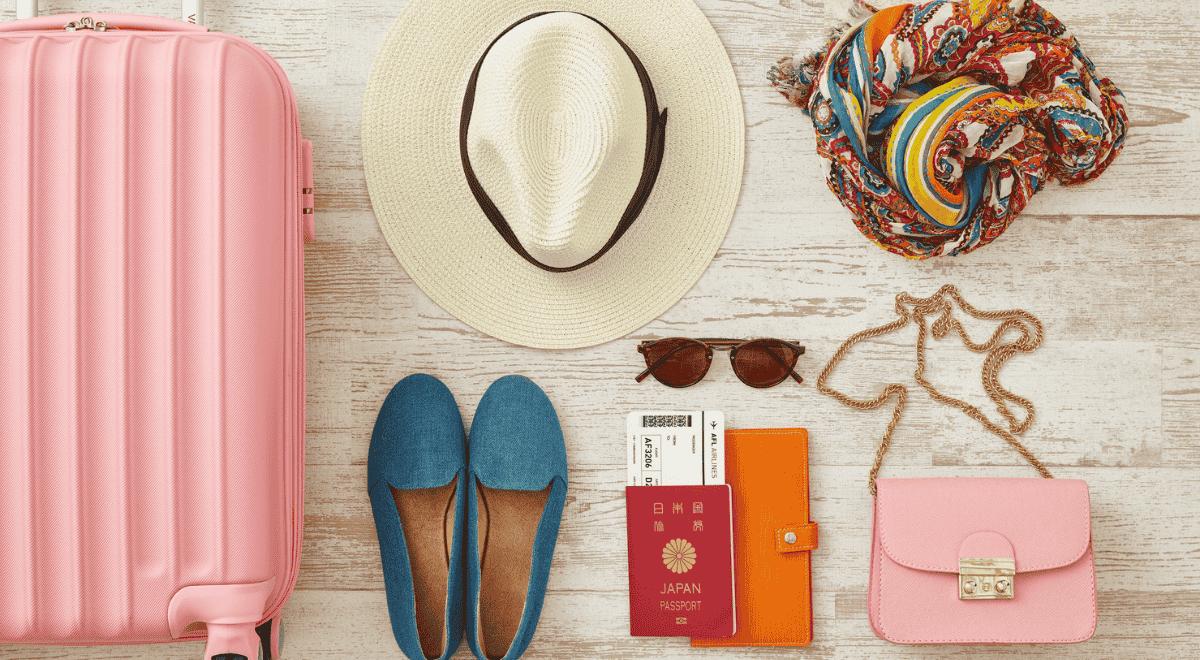
Travel essentials aren't just the obvious stuff like your passport and toothbrush. They're the things that quietly make every part of a trip easier: the power bank that saves you at a dead airport gate, the blister plasters you're glad you threw in last minute, the RFID wallet that protects your cards in a busy market.
This guide breaks down exactly what belongs in your bag — organized by category, customized for your destination, and written for real travellers, not sponsored checklists.
Documents & Identity — The Non-Negotiables
Before a single item of clothing makes it into your bag, your documents need to be sorted. A misplaced visa confirmation or an expired passport can cancel a trip before it starts. Think of your document bundle as the one thing you would never — under any circumstances — check into a hold bag.
What to Bring:
1. Passport or National ID
Valid for at least 6 months beyond your travel dates. Some countries, including many in Southeast Asia and the Middle East, strictly enforce this rule at immigration. Don't assume you're fine just because your passport technically hasn't expired.
2. Travel Insurance Certificate
Digital copy on your phone AND a printed backup. This matters more than most people realize — medical evacuation from a remote location can cost upward of $50,000 USD. One day of skipping insurance to save $30 is rarely worth it.
3. Visa Confirmation
Screenshot or printout for e-visas; original sticker visa documentation where required. Check entry requirements at least 3 weeks before departure.
4. Accommodation Confirmations
Even if you don't expect to need them. Immigration officers at some borders ask for proof of onward accommodation, particularly for first-time visitors.
5. Emergency Contacts Card (on paper)
Write down the local embassy number, your travel insurance hotline, your home emergency contact, and your bank's overseas number. Phones die and screens break — paper doesn't.
Pro Move: Scan every document and send the PDF to a dedicated email folder before you leave home. Cloud access means you're never truly stranded, even if your wallet is stolen on day one.
Tech & Power — Stay Charged, Stay Connected
Your smartphone is already doing the work of a map, translator, boarding pass, camera, and entertainment system all at once. The travel tech you bring should support that one device — not add more cables and complications to manage.
Two rules to live by: bring enough power to last a full long-day transit, and bring adapters that actually work where you're going.
The Travel Tech Essentials:
1. Power Bank (20,000 mAh minimum)
Charges your phone 4 to 5 times. Worth the extra 400g on any trip that involves long flights, train journeys, or full days away from your accommodation. Look for models with USB-C input so you're charging everything with one cable.
2. Universal Travel Adapter
A single adapter covering Type A, B, C, and G plugs covers over 95% of countries worldwide. Avoid buying cheap plastic ones at airports — they fail. Invest once in a quality model.
3. eSIM or Local SIM Card
eSIM technology is now available in more than 100 countries. Set it up through your phone's settings before you land to avoid expensive roaming charges from your home carrier. For destinations not covered by eSIM, research local SIM options in advance — they are almost always cheaper than airport kiosks.
4. Noise-Cancelling Earbuds or Headphones
Transforms a 12-hour flight. Doubles as a clear "do not disturb" signal in hostels, buses, and co-working spaces. Wireless earbuds take up less space; over-ear headphones offer better noise cancellation on long-haul flights.
5. Multi-Port Charging Cable (USB-C + Lightning)
Fewer wires, same functionality. A single braided cable that handles multiple device types saves you from carrying a tangled cable bundle.
6. RFID-Blocking Wallet
Protects your contactless cards from skimming in crowded transport hubs and tourist areas. Slim bifold versions weigh almost nothing. Well worth the small investment.
Optional but Useful: A compact Bluetooth speaker (for accommodation), a portable laptop sleeve (for remote workers), and a waterproof phone case (for beach or water-based destinations).
Health & Comfort — The Small Things That Save Big Trips
Health items are the category most travellers underpack. You don't think about them until you need them at 2am in a city where you don't speak the language and the nearest pharmacy opens at 9am.
Build a mini travel health kit that fits in the palm of your hand:
Essential Health Items:
1. Mini Pharmacy Pouch
Include: paracetamol or ibuprofen, antihistamine tablets, rehydration sachets, motion sickness tablets, anti-diarrheal medication, and a small selection of blister plasters and wound dressings.
2. Prescription Medication
Bring more than you think you'll need — delays happen. Keep medication in original packaging with the prescription label visible. Some countries require documentation for certain medications at customs.
3. SPF 50 Sunscreen Stick
The stick format doesn't count as a liquid (no 100ml rule), never leaks in your bag, and lasts longer than bottled sunscreen. A single stick can last a 2-week trip.
4. Microfibre Towel
Dries in 20 minutes. Rolls to the size of a water bottle. Essential for hostels, beach days, and budget accommodation that charges extra for towels.
5. Sleep Mask and Ear Plugs
A proper sleep mask and foam ear plugs are the single best investment for hostel dorms, overnight buses, early-morning departures, and jet lag recovery.
6. Collapsible Water Bottle
Stays completely flat in your bag until you need it. Fill it up once you're past airport security. Saves money, reduces plastic waste, and means you're never dehydrated on a long day.
Solid Toiletries Tip: Solid shampoo bars, solid conditioner bars, and sunscreen sticks skip the liquid rule entirely and tend to last longer per gram than their liquid equivalents. They're not just an eco-conscious choice — they're a practical one for anyone travelling carry-on only.
Carry-On Strategy — Pack Smart, Not Just Light
The goal isn't to minimise what you bring. It's to only bring things you'll actually use — and to organise them so you can access everything quickly and efficiently.
A well-organised 20-litre personal item bag can often carry more useful gear than a chaotic 40-litre backpack. Organisation is the multiplier.
The Carry-On System That Works:
1. Packing Cubes (set of 3)
Separate tops, bottoms, and underwear/socks into individual cubes. Find anything in under 10 seconds. Compression cubes reduce clothing volume by up to 30%.
2. Merino Wool Base Layers
Merino wool is odour-resistant, wrinkle-free, temperature-regulating, and machine washable. One merino t-shirt can realistically cover 3 days of wear without smelling. Bring 2 to 3 for a week-long trip.
3. 100ml Toiletry Decants
Transfer your full-size products into refillable silicone bottles rather than buying single-use travel-size products. Label them. Keep them all in one clear zip bag for security.
4. Foldable Tote Bag
Weighs around 40g, folds to the size of a fist, and becomes your go-to bag for beach days, market runs, souvenir hauls, and day trips when you don't want to carry your full pack.
Clothing Packing Rule: Never pack more than 7 days of clothing, regardless of trip length. Laundry facilities — hand washing, laundromats, hotel services — exist everywhere in the world. Focus your weight budget on items that genuinely cannot be replaced easily while travelling: medication, electronics, documents.
Destination-Specific Essentials
The core 80% of your bag stays the same for every trip. The remaining 20% depends on where you're actually going. Here's what changes:
Southeast Asia (Thailand, Vietnam, Indonesia, Cambodia, Philippines)
- DEET-based insect repellent (mosquito-borne illness is real here)
- Lightweight packable rain jacket (monsoon season is unpredictable)
- Electrolyte powder sachets (heat and spicy food = dehydration)
- Stomach upset tablets and oral rehydration salts
- Modest clothing for temple visits (shoulders and knees covered)
Himalayan Region / High Altitude (Nepal, Tibet, Bhutan, Ladakh)
- Altitude sickness medication (acetazolamide — consult a doctor)
- Thermal base layers and a mid-layer fleece
- High-SPF lip balm (UV intensity increases significantly at altitude)
- Trekking poles if hiking
- Water purification tablets for remote areas
Sub-Saharan Africa (Kenya, Tanzania, Rwanda, Uganda, South Africa)
- Antimalarial medication (prescription required, start before travel)
- Yellow fever vaccination card (required for entry in many countries)
- Water purification tablets or a SteriPen
- A head torch for areas with unreliable electricity
- Conservative clothing for rural and religious areas
Western Europe (France, Italy, Spain, Germany, UK, Portugal)
- Quality walking shoes broken in before you leave (you will walk 15,000+ steps per day in most European cities)
- A light scarf or shawl for church and cathedral visits
- A transit card top-up or contactless payment setup for local metro systems
- A compact day bag with anti-pickpocket features
Tropical / Beach Destinations (Maldives, Seychelles, Caribbean, Bali)
- Reef-safe mineral sunscreen (chemical sunscreens are banned in some island nations to protect coral reefs)
- Rash guard (UPF 50+ protection for long ocean days)
- A dry bag (10–20L) to protect your phone and documents on boats
- Quick-dry shorts and swimwear that double as casual outerwear
Do I need travel essentials for a weekend trip?
Yes, but a minimal version. For a 2–3 day trip, you need: ID or passport (if crossing borders), one change of clothes, your phone charger and power bank, any regular medication, and a small toiletry pouch. Everything else can be bought locally if you forget it.
Quick-Reference Master Checklist
Documents
- ☐ Passport / national ID (6+ months validity)
- ☐ Travel insurance certificate (digital + printed)
- ☐ Visa confirmation
- ☐ Accommodation confirmations
- ☐ Flight/transport tickets
- ☐ Emergency contacts card (paper)
- ☐ Scanned document copies (cloud + email)
Tech & Power
- ☐ Smartphone (fully charged before departure)
- ☐ Universal travel adapter
- ☐ Power bank (20,000 mAh+)
- ☐ Charging cables (multi-port if possible)
- ☐ Earbuds or headphones
- ☐ eSIM set up or local SIM researched
- ☐ RFID-blocking wallet
Health & Comfort
- ☐ Prescription medication (+ extra supply)
- ☐ Mini pharmacy pouch (paracetamol, antihistamine, etc.)
- ☐ SPF 50 sunscreen stick
- ☐ Insect repellent (destination-dependent)
- ☐ Sleep mask + ear plugs
- ☐ Collapsible water bottle
- ☐ Microfibre towel
Clothing & Packing
- ☐ 5–7 days of clothing maximum (any trip length)
- ☐ Merino wool base layers (2–3)
- ☐ Packing cubes (set of 3)
- ☐ 100ml toiletry decants in clear zip bag
- ☐ Foldable tote bag
- ☐ Comfortable walking shoes (broken in)
- ☐ Light jacket or layers (even in warm climates)
Destination Add-Ons (check what applies)
- ☐ Rain jacket (Southeast Asia, UK, monsoon regions)
- ☐ Altitude medication (Himalayan treks)
- ☐ Antimalarials (sub-Saharan Africa, parts of Asia)
- ☐ Yellow fever card (Africa, South America)
- ☐ Water purification tablets (remote destinations)
- ☐ Dry bag (water activities, boat travel)
- ☐ Reef-safe sunscreen (coral reef destinations)
- ☐ Trekking poles (mountain hiking)
FAQ — Common Questions Answered
What are the most important travel essentials for a first-time traveller?
Your passport (valid for 6+ months), travel insurance, a universal travel adapter, a 20,000 mAh power bank, and a basic health kit cover 90% of travel emergencies. Everything else is a comfort choice. Start with these five and build from there.
What travel essentials are allowed in carry-on luggage?
All electronics, medications, documents, passports, and valuables should always travel in your carry-on, never checked luggage. Liquids must be under 100ml per container and fit within a single 1-litre clear resealable bag. Solid toiletries (shampoo bars, sunscreen sticks, solid deodorant) bypass the liquid rule entirely.
What travel essentials should women pack?
Beyond the universal packing list, consider: a portable door alarm for solo accommodation (under $10), a discrete anti-theft crossbody bag with slash-proof straps, a lightweight scarf that doubles as a cover-up in conservative regions, and a small personal safety kit that includes a door stopper alarm and a personal GPS tracker for solo travel in remote areas.
How do I pack light without missing travel essentials?
Use the one-week cap rule: never pack more than 7 days of clothing regardless of how long you're travelling. Laundry is available everywhere. Pack versatile, mix-and-match clothing in a neutral colour palette so every item works with every other item. Focus your weight allowance on the irreplaceable: medication, electronics, and documents.
What are the best eco-friendly travel essentials?
A collapsible reusable water bottle, solid shampoo and conditioner bars, a bamboo toothbrush, a foldable tote bag, reef-safe mineral sunscreen, and reusable silicone toiletry bottles are the core eco-swaps. They also happen to pack more efficiently and last longer than their single-use plastic equivalents.
What travel essentials do I need for a long-haul flight?
The long-haul flight kit: noise-cancelling headphones, a neck pillow (inflatable ones save bag space), sleep mask, ear plugs, an empty water bottle to fill after security, lip balm, face moisturiser (cabin air is extremely dry), compression socks to prevent DVT on flights over 4 hours, and a phone charger or power bank for aircraft without USB ports.